
Schools seem to have universal taste for “about my family” or “my family tree” projects.
I loathe them. And they seem to happen every year in some form or another.
They’re a lot of pressure on foster kids to open up about being in foster care, or have the project raise questions when they talk about different people than the ones who pick them up at school. Talk about awkward and embarrassing for kids. Children can be cruel, and foster kids are easy targets. These projects expose foster kids to ridicule, and even if they’re not bullied for it, it sets them up for a lot of stress. How much are they going to reveal? They have enough stress without school projects adding to it!
A lot of adoptees are vocal about hating the school projects about their families, too. Again, they have to say they’re adopted, which is something they should be free to address or not as they see fit. Or else they have to admit they don’t know about their family tree. Either way, adoptees often feel deeply uncomfortable about such projects. A dear friend of mine who is an adoptee said about family tree projects “I was always at a loss how to answer.”
Even kids with just complex family dynamics feel pressure about such projects. Another friend says “family tree projects give me hives.” Admitting your parents are getting a divorce when the situation is new and raw is not something kids tend to relish, even if divorce is super common these days. It’s still deeply personal to each kid who is experiencing it. Or the kid who doesn’t have a dad involved. Or the kid with same-sex or trans parents. My list could go on and on.
The family tree projects are especially awful in another respect. The children’s book “Born on the Water” talks about a child who, unlike their peers who are listing European countries, can’t identify the country of origin for their family because their family came to this country as enslaved people and that history was lost along the way. Yuck. While it might turn out to be a good lesson for their peers, no kid should have to be the subject of a lesson if they don’t actively want that.
I could go on and on. But today? I just read an absolute gem of a book.
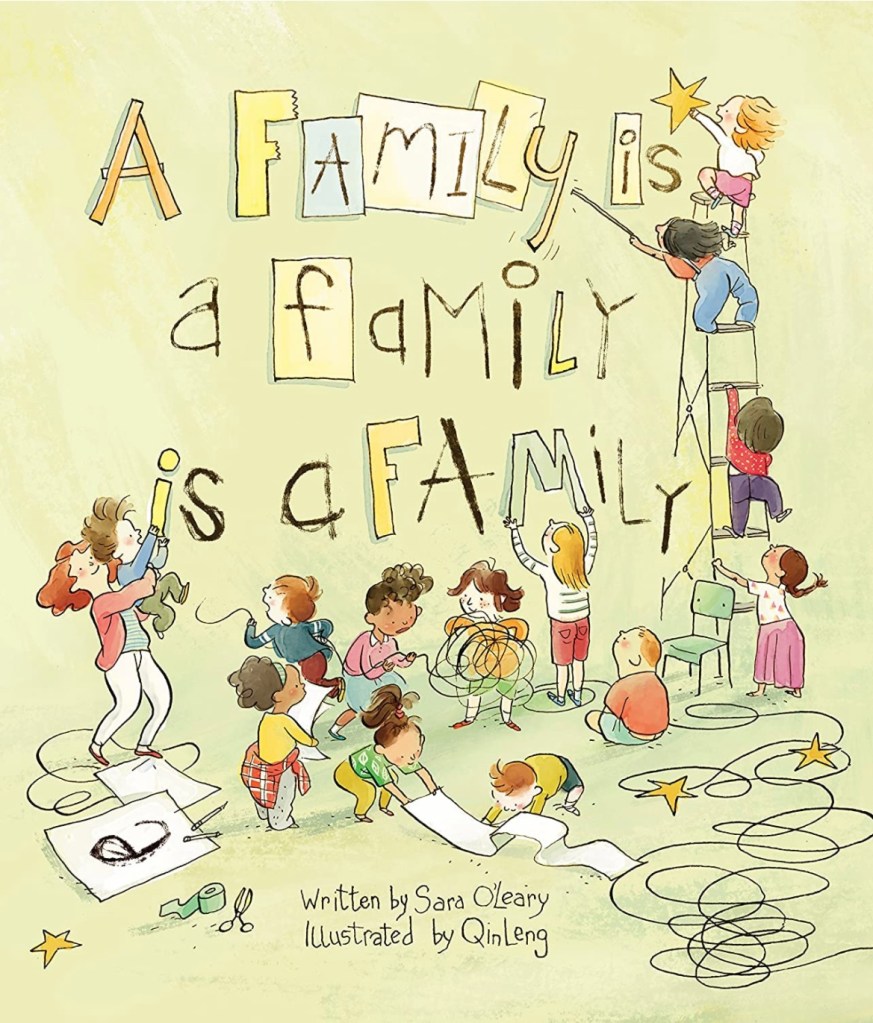
It was suggested to me by my friend Brooke, who edits vast lists of books for work. She stumbled on this one and recommended it because the main character happens to be a foster kid. The story is about a foster child whose class is doing an “about my family” project, and they’re nervous because their family is not typical.
The book handles the issue in a great way. The upshot is that several other kids in the class have non-nuclear or different types of families, and the narrator sees some commonalities among all the kids’ descriptions of their families.
The narrator remembers a moment with their foster mom, that made them feel included.
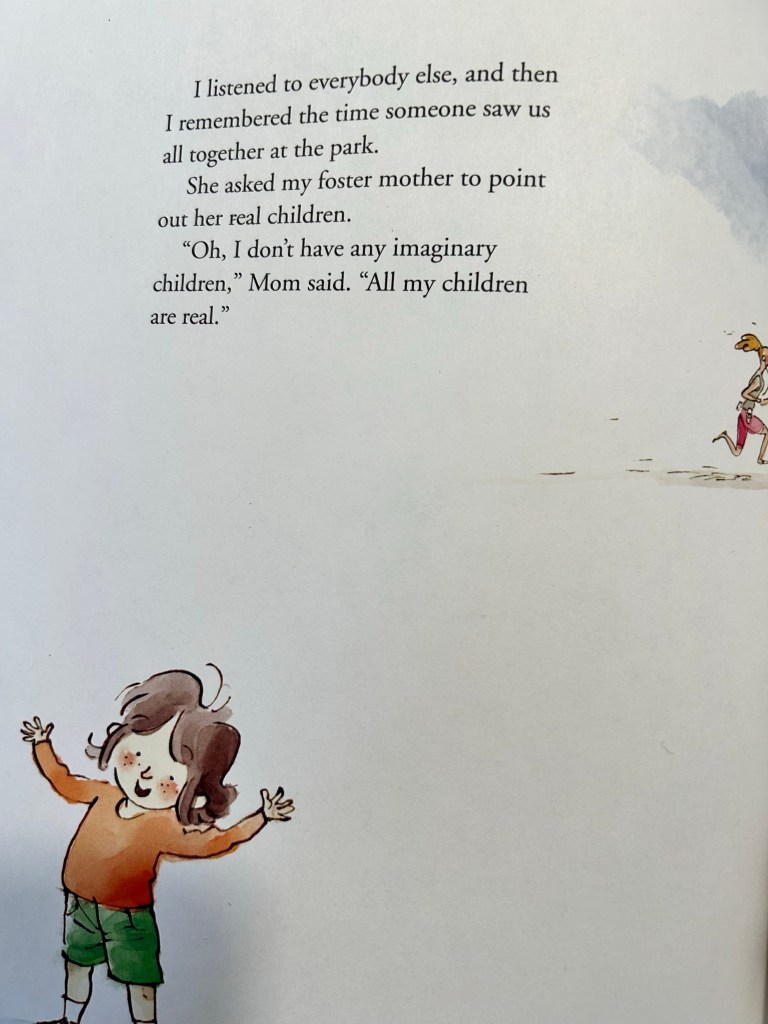
I’m stealing this response! I don’t get asked this all that often now since my foster kids are of a different race, but I do still get asked “are they your real kids?” sometimes. I’m definitely going to answer that they aren’t imaginary! Ha! I also get asked if my kids are adopted, to which I simply answer “no,” and change the subject or walk away. People are curious, yes. But nosey too!
I feel that “A Family is a Family is a Family” is a great book for any kid with an “unconventional” family, and especially foster kids. It’s definitely entering our regular repertoire!
 sprinklesonachaoscupcake.com