
I feel like there are so many foster care blogs that are very religious, and a lot of people do enter foster parenting because they say they are Christian and “felt called by God” to foster or adopt kids. If you read my previous post about why I foster, you know God doesn’t really factor into my decision to be a foster parent. That said, we are churchgoers. I’m not sure how much we are Christians though.
Seth and I both grew up in religious families. When he was a kid, Seth’s family was Pentecostal, and he was homeschooled. I grew up in a Catholic family.
Neither Seth nor I much liked the exclusionary policies of the churches we grew up in. Seth really hated that the ministers of the Pentecostal churches he attended had lots of money and spent their time talking to the congregation about tithing, while most in the congregation in his poor rural community were struggling to put food on the table. Driving the family around in a conversion van and having a bunch of kids wearing designer clothes while the congregation dressed in rags and went hungry didn’t sit well with Seth, and didn’t strike him as being very Christlike.
I hated that my Catholic Church fired the gay choir director because of his sexual orientation. I loved that choir director. His ebullience about the music was a source of joy for me even when I was really depressed as a child, and I needed him. He got fired for loving. Then I turned out not to be straight myself, and knew I wasn’t welcome in the Catholic Church because of that.
As adults, both Seth and I steered widely clear of religious organizations and institutions. We both felt that Christianity was a great source of hypocrisy in the United States and we wanted nothing to do with it.
Then we became foster parents.
One day, leaving daycare, I commented to Kiddo that the baby someone was carrying, who just happened to be Black, was especially cute. She looked at me in surprise and said, “you like Black people?” Shocked I responded that yes, of course I liked Black people. She proceeded then to try to convince me that she herself was white, despite my knowing her Black daddy.
In relating the story to Seth that evening, I wound up in tears, and I am NOT a crier. We were doing something very wrong if Kiddo thought we didn’t like Black people and that she needed to be white to be loved by us. We had intentionally enrolled Kiddo in a very diverse daycare, but when we really thought about it we realized that the kids were diverse – there were more Black kids than white kids – but the teachers were almost all white. Kiddo had no Black adult role models in her daily life, and didn’t see us interacting with Black adults very often. That HAD to change. Immediately.
How on earth would we diversify our local friend group though? I have lots of Black friends from college and law school with whom I am in regular contact, but they live all over the US and none are nearby. My law firm, and Seth’s employer, were shockingly white. My closest friend locally had been Black, but she had died suddenly a few years earlier, so I couldn’t call on her to help us.
The obvious choice? Find a diverse church. STAT.
I was very wary about the prospect because, though I pass as straight since I’m married to a man, I’m not. I couldn’t stomach a church where people equated being gay with being sinful. And way more importantly, Kiddo is somewhere on the gender identity spectrum, sometimes identifying as a boy sometimes as a girl, and I would NOT put her into a situation where she would get pressured to be a girl just because that’s what she had been identified as at birth.
I looked at the local UU churches, knowing they are very liberal and open, but found their online photo galleries were far too white to meet Kiddo’s needs. So I googled the big pretty church we drove past all the time on the way to daycare – the one that had the giant rainbow flag plastered to the side of the building – University United Methodist Church. I was positively delighted when I looked at the online photo galleries and found there were lots of Black members. Check. Check. I decided we would attend on Sunday to see if it might work.
When we walked in the doors on Sunday, within 15 minutes we knew we were home.
The members of the congregation greeted us with effusive warmth that made us feel immediately that we were welcome. The Pastor, who is a woman, started off worship by mentioning that it was a reconciling congregation that was welcoming to people of all sexual orientations and gender identities. The sanctuary was stunningly beautiful, with airy Gothic arches and breathtaking stained glass windows. The music was rich and plentiful. The paper we were handed when we walked in was full of news about outreach programs in the local community, from a food bank to a little free library to social justice activism. And yes, the congregation was truly diverse.
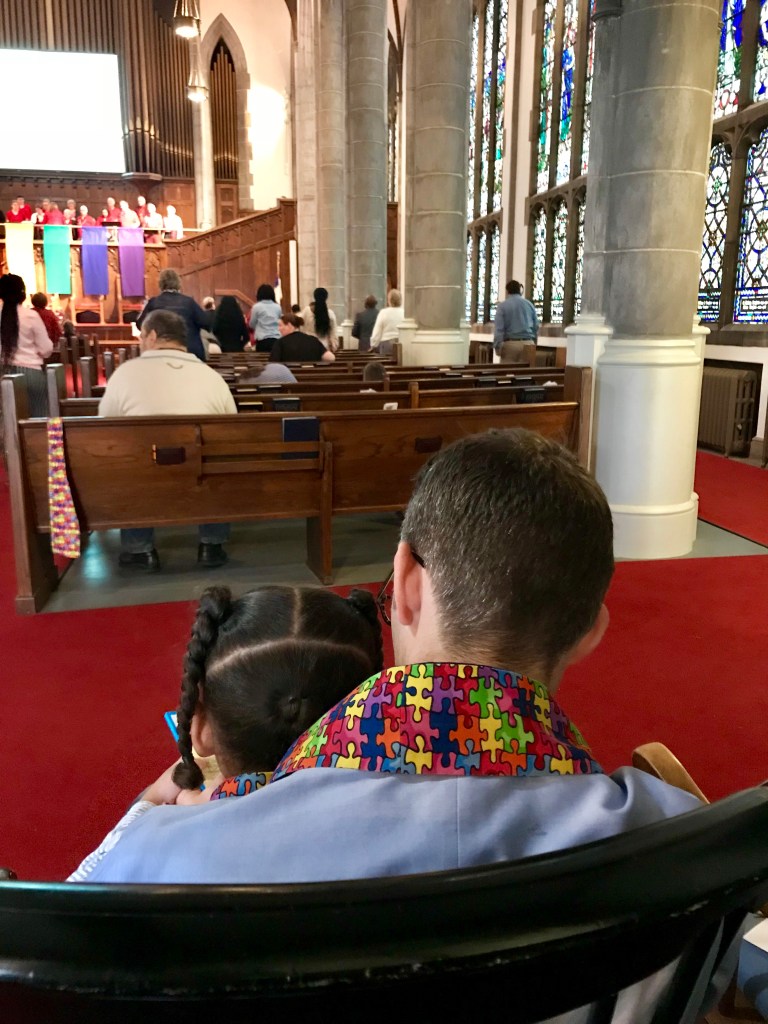
We started attending every weekend. When we were asked to become members of the church, Seth approached the Pastor to tell her that he was, as he puts it, “agnostic on a good day.” She cheerfully responded that all were welcome to become members of the congregation no matter where they were on their faith journeys. So that was that. We became members.
Five years later, I’m still not sure how I feel about that whole “Jesus is the son of God” thing. God and I have a tricky relationship. I do believe, however, that Jesus the man lived a remarkable life. I’m a fan of biblical history, I’ve read fairly extensively, and have traveled in the holy land including on a trip with church members this past spring before Covid-19 put a stop to such travelings. I strongly believe that if we each lived life according to the teachings of Jesus that are set forth in the New Testament, the world would be a better place. I don’t care so much about the worship of God, but if we truly treated our fellow humans according to Jesus’s teachings, the world would be a much kinder, more loving, more beautiful, less lonely, less poverty stricken place. That’s more than enough to keep me going to a Christian church and listening during Worship.
As for Kiddo, she’s a whole lot more comfortable with her identity as a Black person these days. And she loves Church and the Pastor and several members and employees of the church a great deal. Like a typical 9-year-old, she complains that church is “booooring,” but still asks to go most Sundays. I am content knowing that she is growing up experiencing what a healthy caring community is like.
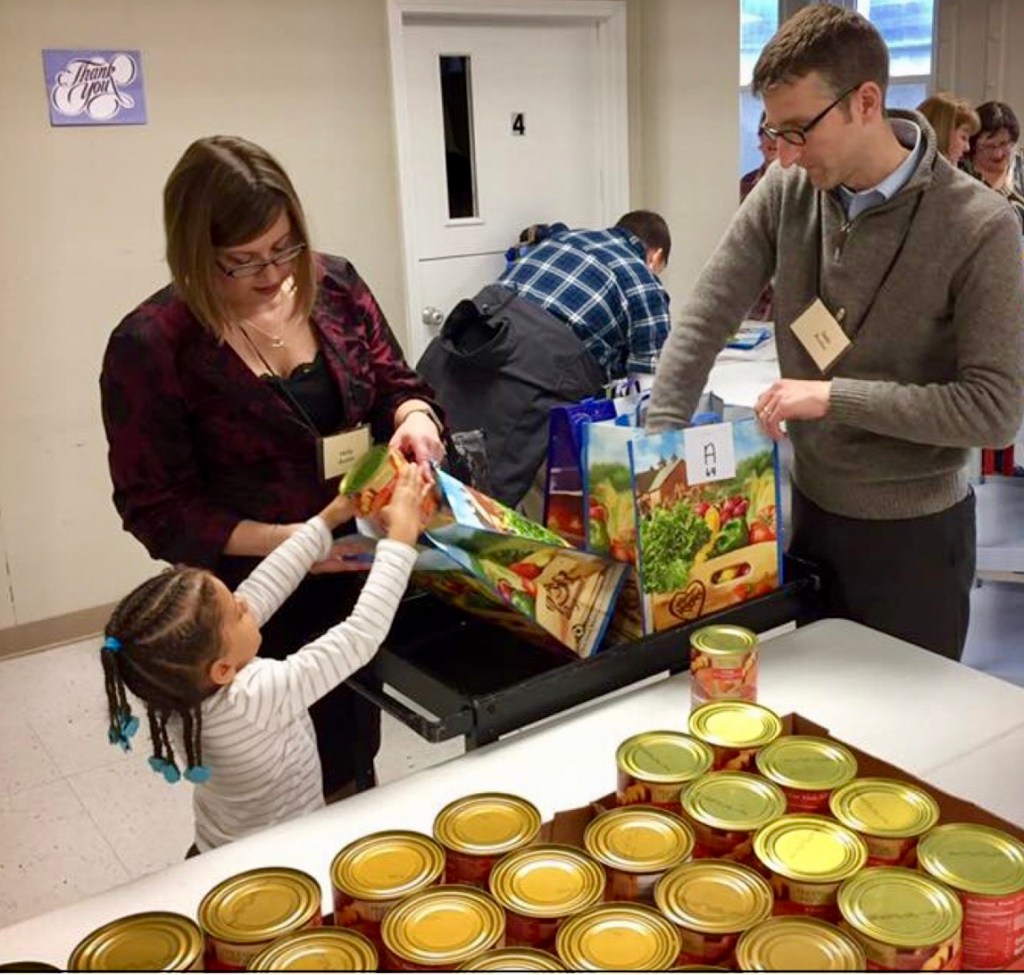
As time has gone on, Seth and I have become increasingly involved with the church, and both serve on various boards and committees. Each and every one of our foster kids has been joyfully welcomed and adored there. Members of the congregation have become good friends who have provided a whole variety of supports to us over the years. In the time of Covid, the church, together with the Food Bank of CNY and a couple of other faith communities, have stepped up and are providing an extraordinary amount of food to those in need. In addition to the rainbow banner, the Church now has banners that say “Immigrants are Welcome” and “Black Lives Matter.”
And I’m very proud to be a member of UUMC’s congregation.
 sprinklesonachaoscupcake.com
I truly adore you, Holly. You are a very special person.
LikeLike
That’s very cool you belong to that church. I pass by it almost everyday, and have always been curious about it.
LikeLike